Letter from the President: The Democratization of Neuroscience – Big Science in Individual Labs
The democratization of neuroscience is a movement that aims to make neuroscience research more accessible and inclusive to everyone. This movement



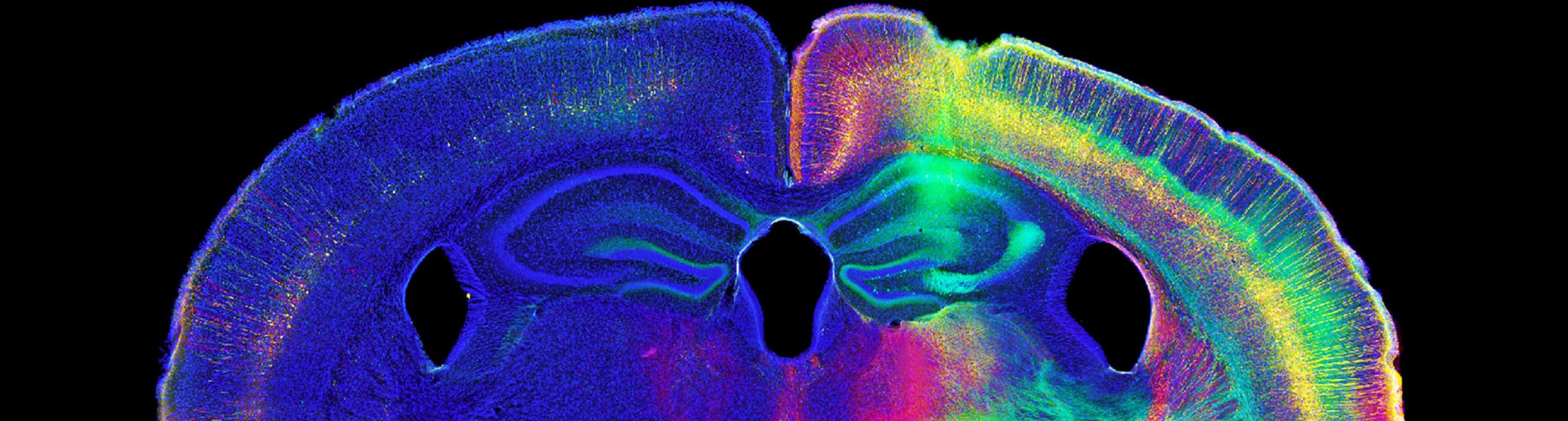
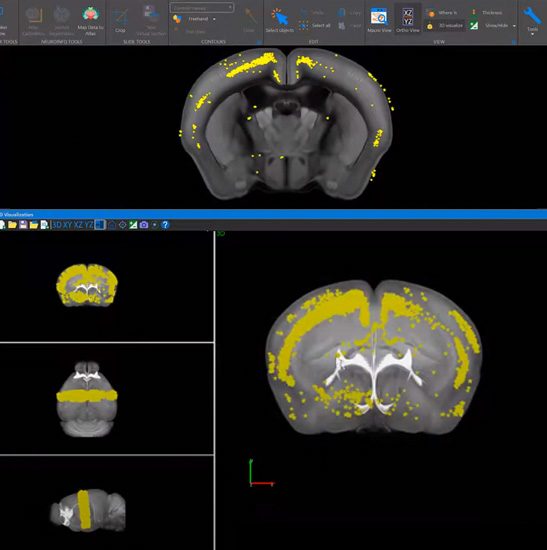
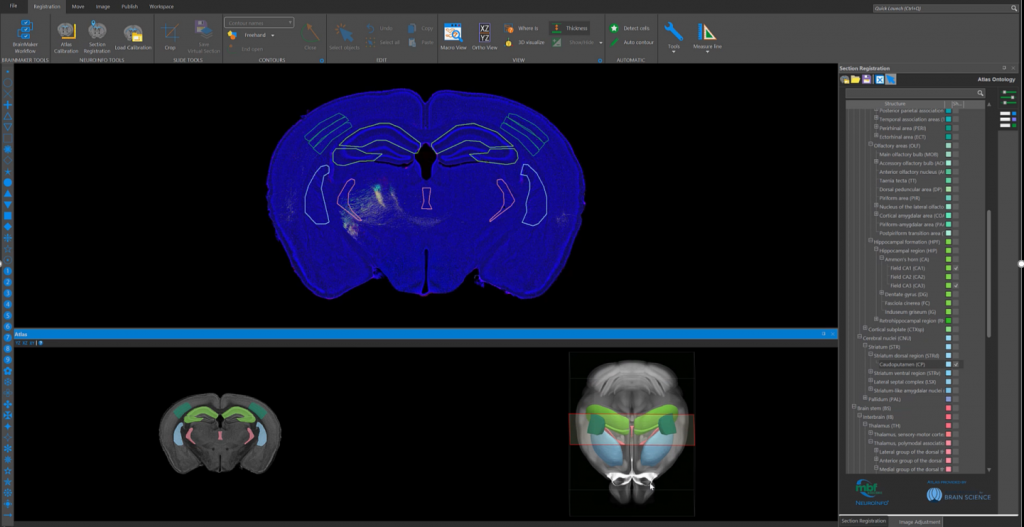
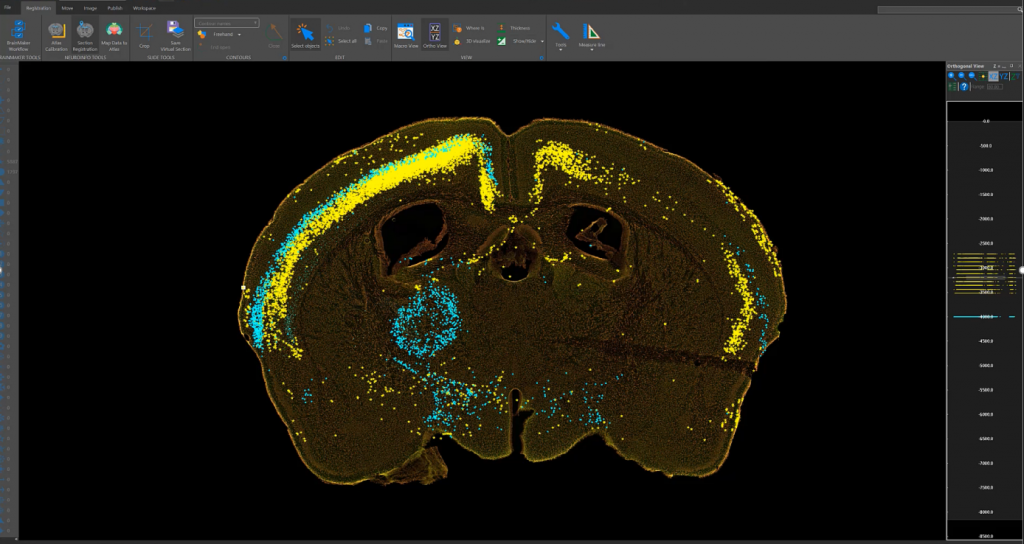
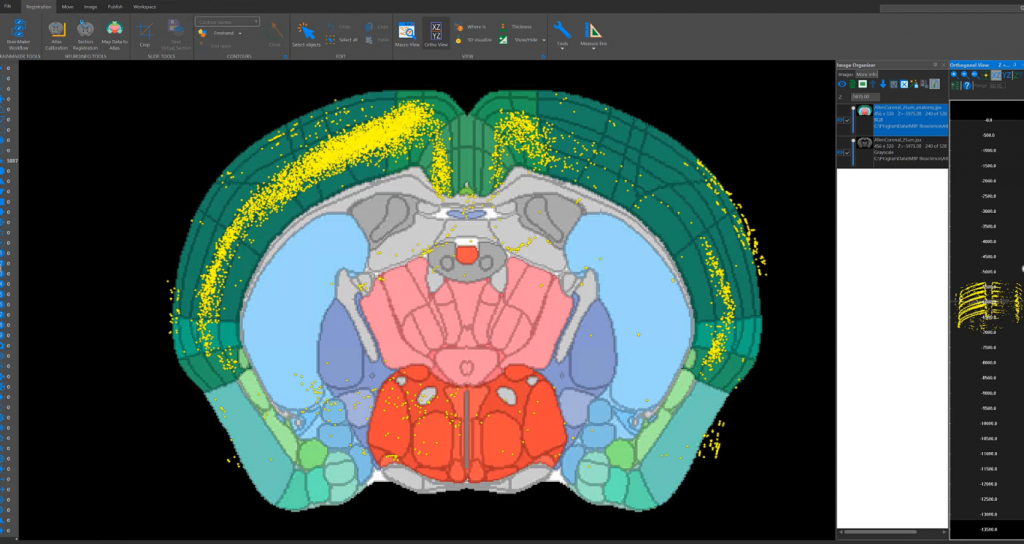
NeuroInfo performs brain-wide characterization of cell populations and biochemical marker expression, and generates quantitative analysis reports on these objects within individual brain regions. Brain volumes are registered to either the Allen Mouse Brain Atlas or the Waxholm Rat Atlas so that experimental measurements can be accumulated or compared in a standardized coordinate system across animals, cohorts, and laboratories. Advanced deep learning methods mean that you can get highly accurate data automatically, and no longer need to manually click cells or draw anatomic boundaries. NeuroInfo’s use of standardized brain atlases established by the scientific community means you can leverage the work of the expert neuroanatomists that created the atlases by aligning your experimental brains with their coordinate systems.
NeuroInfo was developed in collaboration with the Allen Institute for Brain Science.
Recommended Hardware Requirements
NeuroInfo is powerful software that works with image data of any size and complexity. Because of its flexibility, our computing resource recommendations vary to balance affordability and performance required for large, multi-channel data.
Please contact us to help you specify a computing configuration that best suits your imaging and research needs.
| 64-bit Windows 11 operating system |
| CPU with at least 18-24 cores (36-48 threads). More cores improve performance when using large data sets. |
| Solid state hard drive(s). Preferably non-volatile memory express (NVMe) drives. |
| 128 GB of system memory. More memory is better for large data sets and 3D brain registration. |
| Graphics card with 8 GB memory or more. Graphics cards from NVIDIA and AMD have been tested with MBF Bioscience software. |
| Minimum Hardware Requirements (not recommended) |
|---|
| 64-bit Windows 10 operating system |
| 12 core processor (24 threads) |
| 32 GB memory |
| Graphics card with 2 GB memory or more |
| Computer-Hardware Upgrade Priorities |
|---|
| To upgrade your system for better performance with MBF Bioscience software, we suggest that you prioritize computer hardware upgrades as follows: |
|
|
|
Deep Learning for Cell Detection in Neuroscience Research
>> Learn More
A GPS for the brain and so much more
>> Learn More
Huron Digital Pathology and MBF Bioscience Partner to Enable Large-scale, Repeatable Whole Slide Imaging Workflows for Life Science Research
>> Learn More
Neurolucida, NeuroInfo Aids NIH GENSAT Project
>> Learn More
Download NeuroInfo product sheet here.
View Full Version History Here.
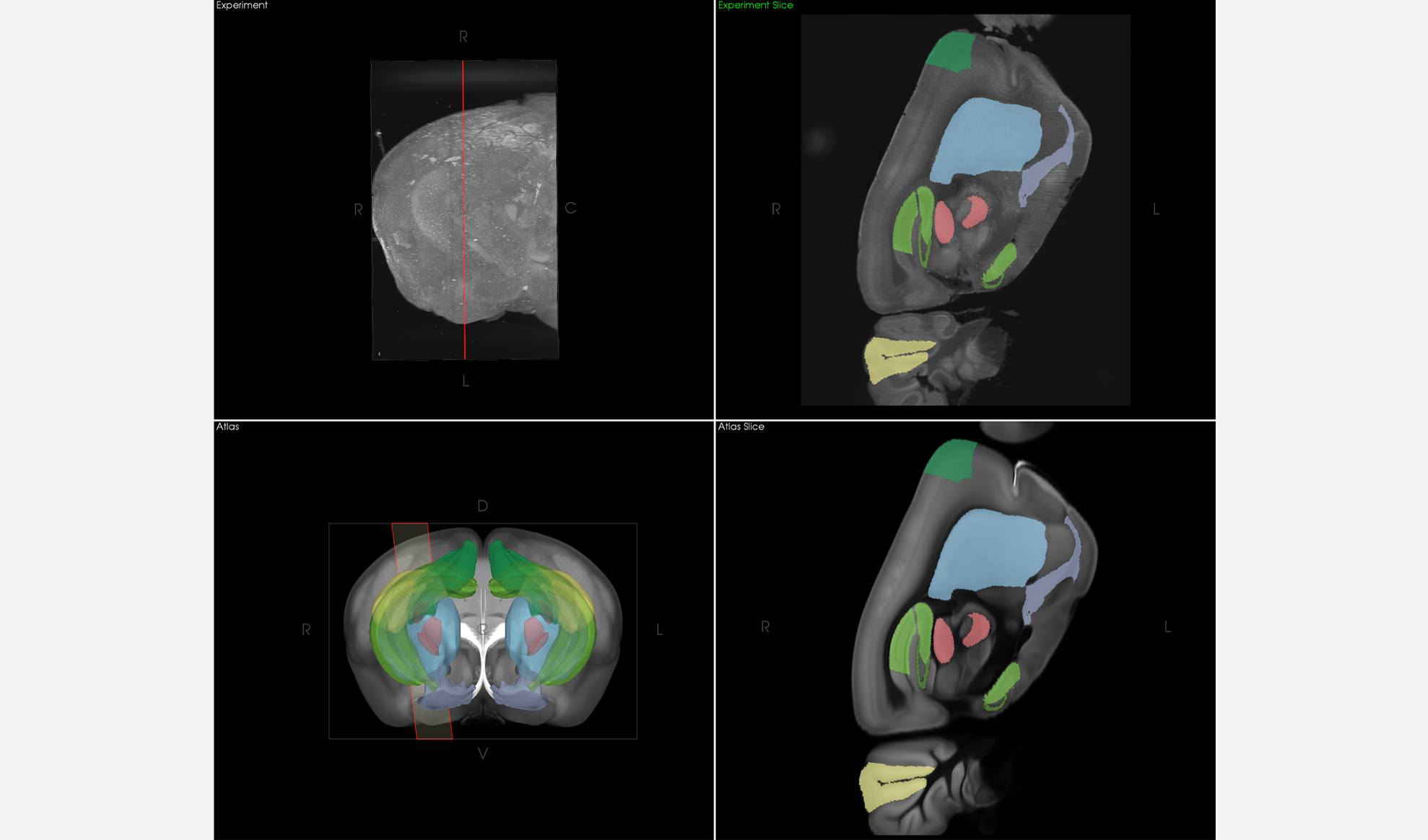
Demonstrates registering a hemisphere into the Allen Brain Atlas. The 3D registration of the right hemisphere of a cleared mouse brain imaged with light sheet microscopy. The experimental image (seen in the top panels) has been registered to the Allen Mouse Brain Atlas (bottom panel) using NeuroInfo's non-linear transformation algorithms. Anatomical regions from the Allen Mouse Atlas can be selected and overlayed onto the user's experimental dataset for mapping, visualization and validation.
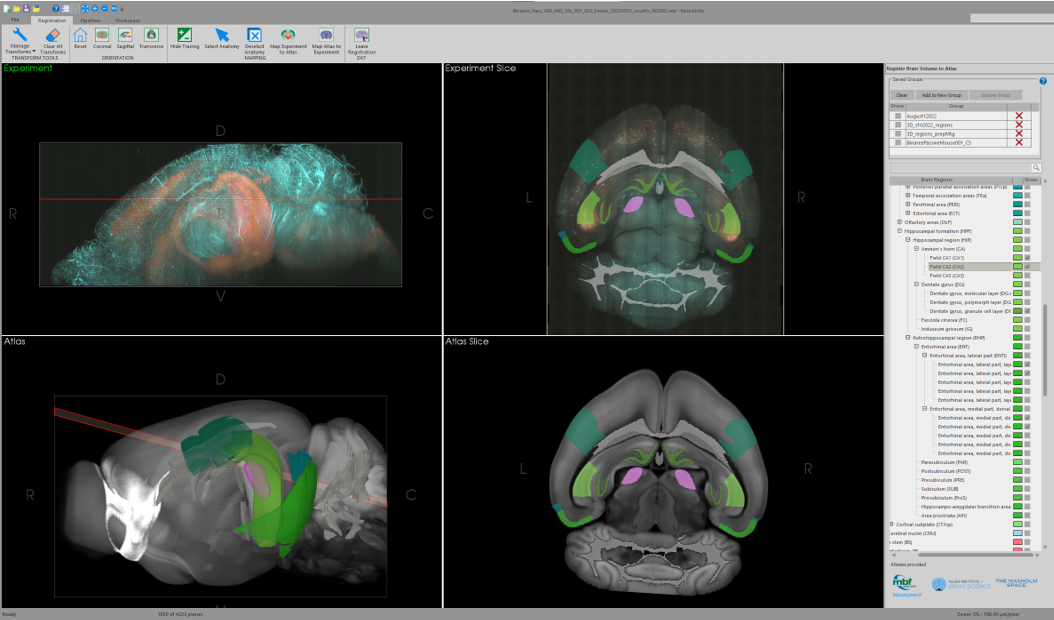
NeuroInfo 3D registration of a light sheet image of cleared mouse brain tissue. The top row displays the experimental image as a sagittal projection (left), and a transverse optical section with brain regions highlighted (right). The lower row displays equivalent images from the Allen average mouse brain CCF. Brain regions are chosen in the ontology panel (right panel).
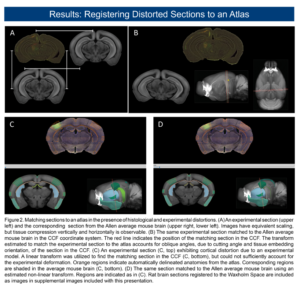
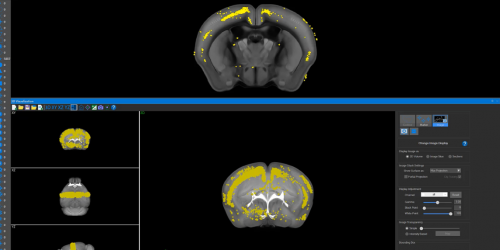
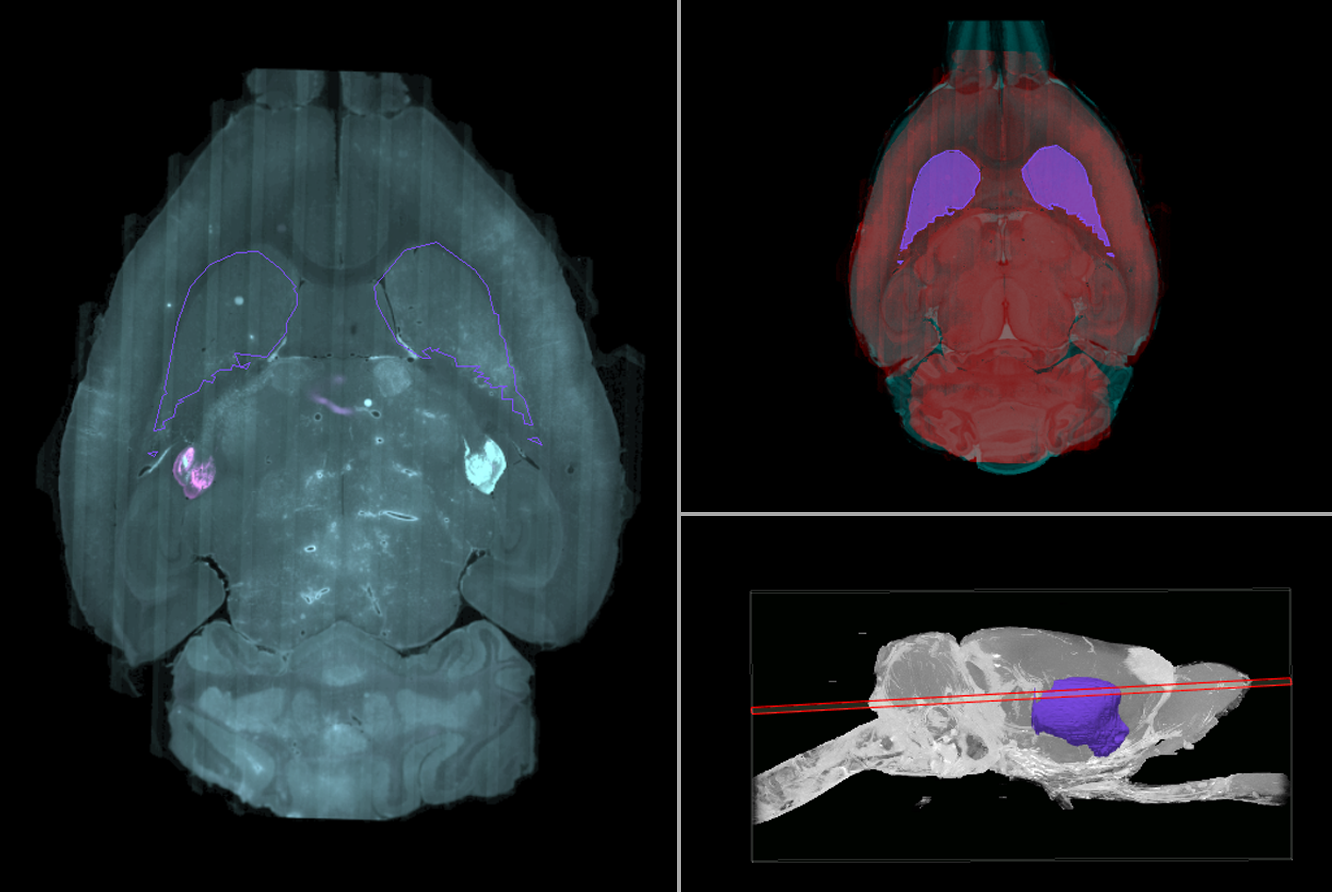
Registering brain image volumes from serial sections and light sheet microscopy to standardized rodent reference atlases for quantitative analyses











The democratization of neuroscience is a movement that aims to make neuroscience research more accessible and inclusive to everyone. This movement
We are pleased to announce that the International Neuroinformatics Coordinating Facility (INCF) has endorsed the MBF Bioscience neuromorphological file format as
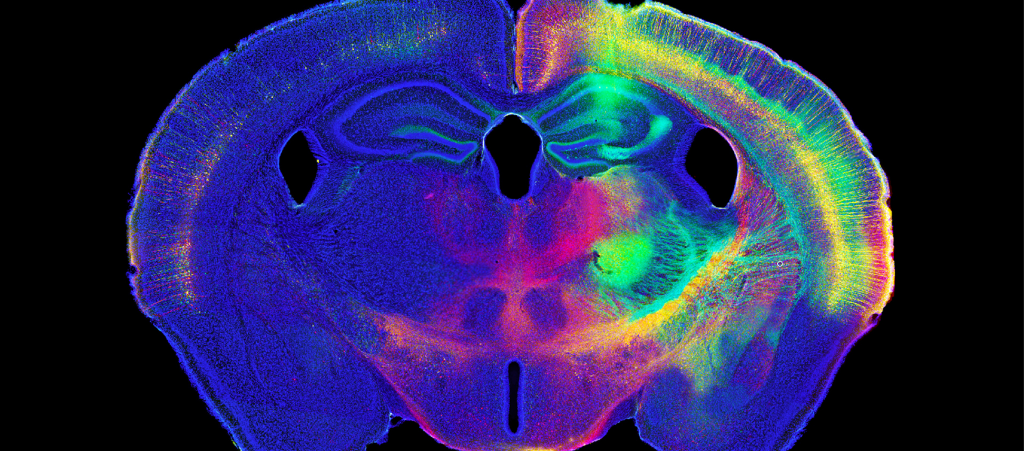
Researchers studying structure and function in rat brain can now use NeuroInfo to analyze and register their brain volumes to the
Boitet, M., H. Eun, et al.
“Non-invasive In Vivo Brain Astrogenesis and Astrogliosis Quantification Using a Far-red E2-Crimson Transgenic Reporter Mouse.” Molecular Neurobiology.View Publication

Niraula, S., J. J. Doderer, et al.
“Excitation-inhibition imbalance disrupts visual familiarity in amyloid and non-pathology conditions.” Cell ReportsView Publication

Emily, P., D. Sarah, et al.
Circuit-Specific Plasticity of Callosal Inputs Underlies Cortical TakeoverView Publication

Sandra, U. O., U. G. Roman, et al.
Organization of Cortical and Thalamic Input to Inhibitory Neurons in Mouse Motor CortexView Publication
Otomo, K., J. Perkins, et al.
In vivo patch-clamp recordings reveal distinct subthreshold signatures and threshold dynamics of midbrain dopamine neurons." Nature Communications 11(1): 6286View Publication

Gergues, M. M., K. J. Han, et al.
Circuit and molecular architecture of a ventral hippocampal network." Nature Neuroscience 23(11): 1444-1452. https://doi.org/10.1038/s41593-020-0705-8View Publication
"I rarely have encountered a company so committed to support and troubleshooting as MBF."

"The NeuroInfo software is so good. It compensates for students’ inexperience. They always lay down sections in the wrong order and have trouble recognizing the anatomy. This solves that problem."

"MBF Bioscience is extremely responsive to the needs of scientists and is genuinely interested in helping all of us in science do the best job we can."

"I am so happy to be a customer of your company. I always get great help related with your product or not. With the experienced members, you are the best team I've ever met. All of your staff are very kind and helpful. Thank you for your great help and support all the time."

"We’ve been very happy for many years with MBF products and the course of upgrades and improvements. Your service department is outstanding. I have gotten great help from the staff with the software and hardware."

"Our experience with the MBF equipment and especially the MBF people has been outstanding. I cannot speak any higher about their professionalism and attention for our needs."